


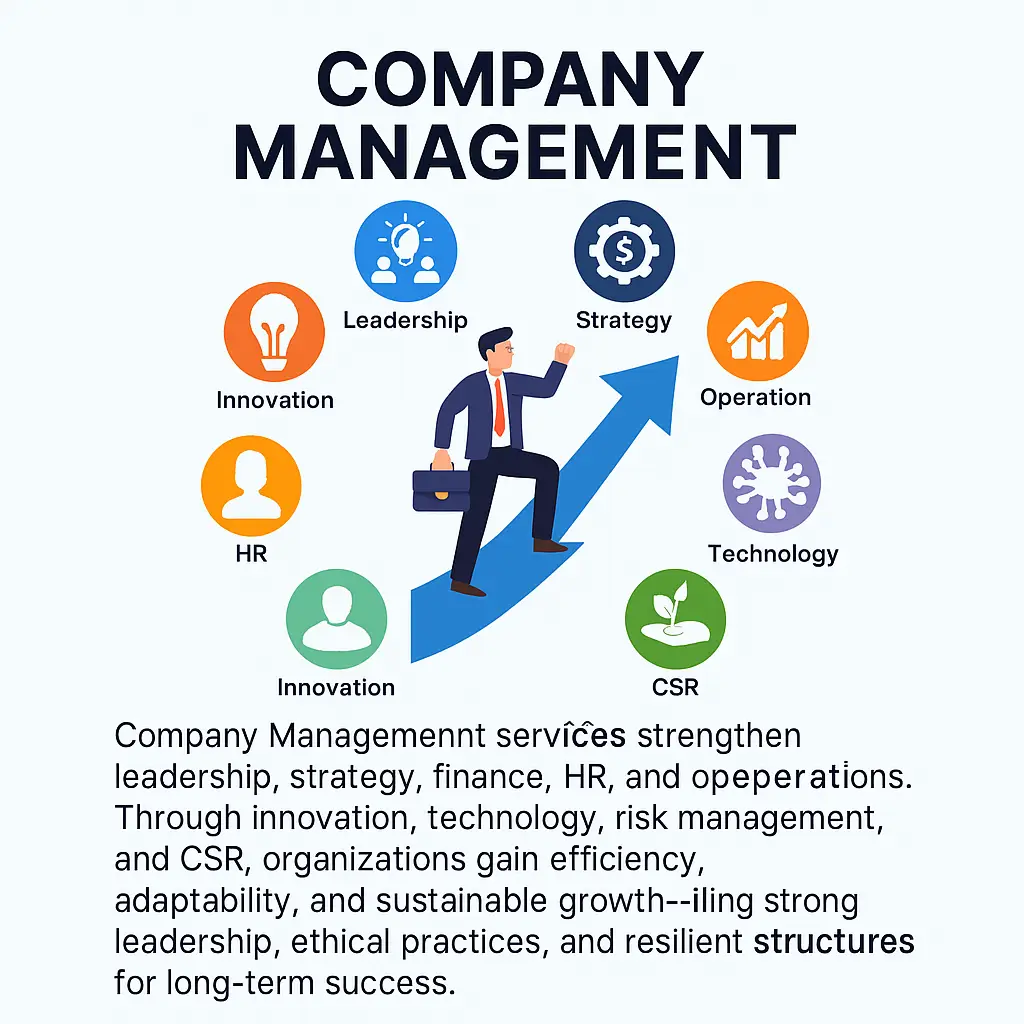
In the intricate symphony of business, company management is the conductor, ensuring every instrument plays in harmony, every section performs optimally, and the entire orchestra delivers a masterpiece. It’s more than just oversight; it’s the strategic guidance, operational finesse, and human touch that transforms a collection of individuals and resources into a cohesive, high-performing entity. In today’s dynamic marketplace, robust company management isn’t just an advantage—it’s the bedrock of survival and sustainable growth.
Effective company management services are designed to strengthen an organization’s core in myriad ways, touching upon every critical facet from leadership and strategy to finance, human resources, and operations. Let’s delve into the key pillars that define this indispensable discipline.
The Pillars of Exemplary Company Management
1. Visionary Leadership & Strategic Direction: At its heart, management begins with leadership. Strong company management cultivates leaders who can articulate a compelling vision, set clear objectives, and inspire their teams to achieve ambitious goals. This involves crafting robust strategic plans that anticipate market shifts, identify opportunities, and mitigate threats. A well-defined strategy acts as a roadmap, guiding decisions and resource allocation across the entire organization, ensuring everyone is moving in the same direction towards a shared future.
2. Financial Prudence & Resource Optimization: Sound financial management is the lifeblood of any business. This pillar encompasses meticulous budgeting, astute financial planning, accurate reporting, and effective cost control. It’s about more than just balancing the books; it’s about optimizing capital, making informed investment decisions, and ensuring the financial health and stability required for long-term growth. Expert management ensures resources—be they financial, technological, or human—are allocated efficiently to maximize impact and return.
3. Empowering Human Resources & Talent Management: An organization is only as strong as its people. Company management excels in attracting, developing, and retaining top talent. This involves creating a positive and inclusive workplace culture, implementing effective performance management systems, offering continuous learning and development opportunities, and fostering open communication. When employees feel valued, motivated, and aligned with the company’s mission, productivity soars, innovation thrives, and turnover decreases.
4. Streamlined Operations & Process Efficiency: Operational excellence is about doing things right, every time. This pillar focuses on optimizing workflows, streamlining processes, and leveraging technology to enhance efficiency and productivity. From supply chain management to customer service protocols, effective management identifies bottlenecks, eliminates waste, and implements best practices to ensure smooth, cost-effective, and high-quality delivery of products or services. This continuous improvement mindset leads to greater agility and responsiveness.
Modern Dimensions of Management Excellence
Beyond these foundational elements, contemporary company management integrates several crucial dimensions to navigate the complexities of the 21st century business landscape:
5. Innovation & Technology Integration: In an era defined by rapid technological advancement, fostering a culture of innovation is paramount. Effective management encourages experimentation, embraces new technologies, and leverages data analytics to drive informed decision-making. This isn’t just about adopting tools; it’s about embedding a forward-thinking mindset that constantly seeks better ways to create value.
6. Robust Risk Management & Crisis Preparedness: Every business faces risks, from market volatility to cybersecurity threats. Strong company management identifies potential risks, develops proactive mitigation strategies, and establishes clear protocols for crisis response. This preparedness builds resilience, allowing organizations to weather storms and emerge stronger.
7. Corporate Social Responsibility (CSR) & Ethical Governance: Modern stakeholders expect businesses to operate with a conscience. Company management increasingly incorporates CSR initiatives, focusing on environmental sustainability, social impact, and ethical governance. This not only enhances brand reputation but also attracts socially conscious talent and customers, contributing to long-term societal and business value.
The Outcome: Sustainable Success
The cumulative effect of robust company management is an organization that is not only efficient and adaptable but also primed for sustainable growth. It builds strong leadership pipelines, instills ethical practices throughout the enterprise, and constructs resilient structures capable of weathering economic shifts and market disruptions.
In essence, effective company management transforms potential into performance, challenges into opportunities, and aspirations into achievements. It’s the continuous, evolving commitment to excellence that ensures an organization doesn’t just survive but truly thrives, leaving a lasting legacy of success.